I’ve been working as a C# developer since 2010, but my interest in computers started much earlier.
It Started with Pinball
It’s been my dream to work with computers — well, actually, playing games on a PC is what got me interested. Back when I was still an elementary student, my dad bought a PC with an Intel Pentium inside, along with a big-ass Epson printer that I’m still not sure why he bought (in the end, it was a waste of money). Nevertheless, that was my first introduction to computers — mostly playing pinball. When I got a bit older, I learned how to install custom games, and I felt a bit geeky.
The C# Years
Long story short, my career has mostly been with Microsoft-based C# technology, which for me is fine — no problem. I work for a living, I code for food. At one point I was laid off and explored other technologies, like WordPress and some low-code framework with Java behind it. But now I’m back with C#, my old friend. It has always accompanied me, from when I was single to now that I have a family with two kids.
The AI Shift
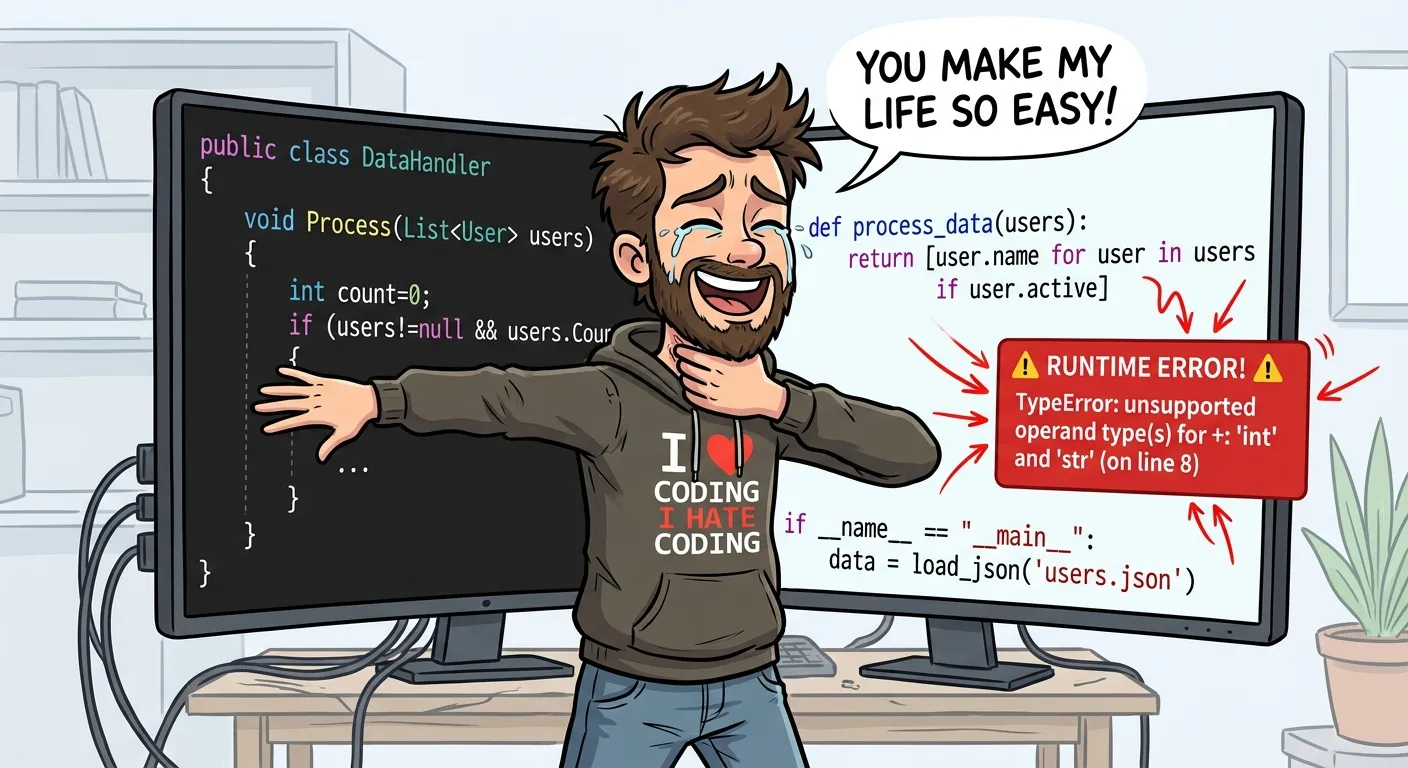
Back then, I busted my brain from morning to midnight trying to fix an issue with zero results, and it made me question my ability — or my career as a developer. But in this AI age, everything seems easy. Ask any question and you get all the answers (even the hallucinated ones). Many people now believe that technology stacks don’t matter anymore: you have years of experience in C#, so you can easily switch to another language like Python (in this case: me).
In my opinion, that’s half true, half false.
The true half: what really transfers between languages is the fundamentals — problem solving, debugging, reading other people’s code. Those don’t disappear when you switch languages. The false half: believing you can skip the hard part of learning a new ecosystem — its tools, its libraries, its community.
So, why now? That’s exactly what this blog will explore: what it’s like for a long-time .NET developer to start learning Python in the AI age. To be continued in the next post.